PEIBUA Newsletter
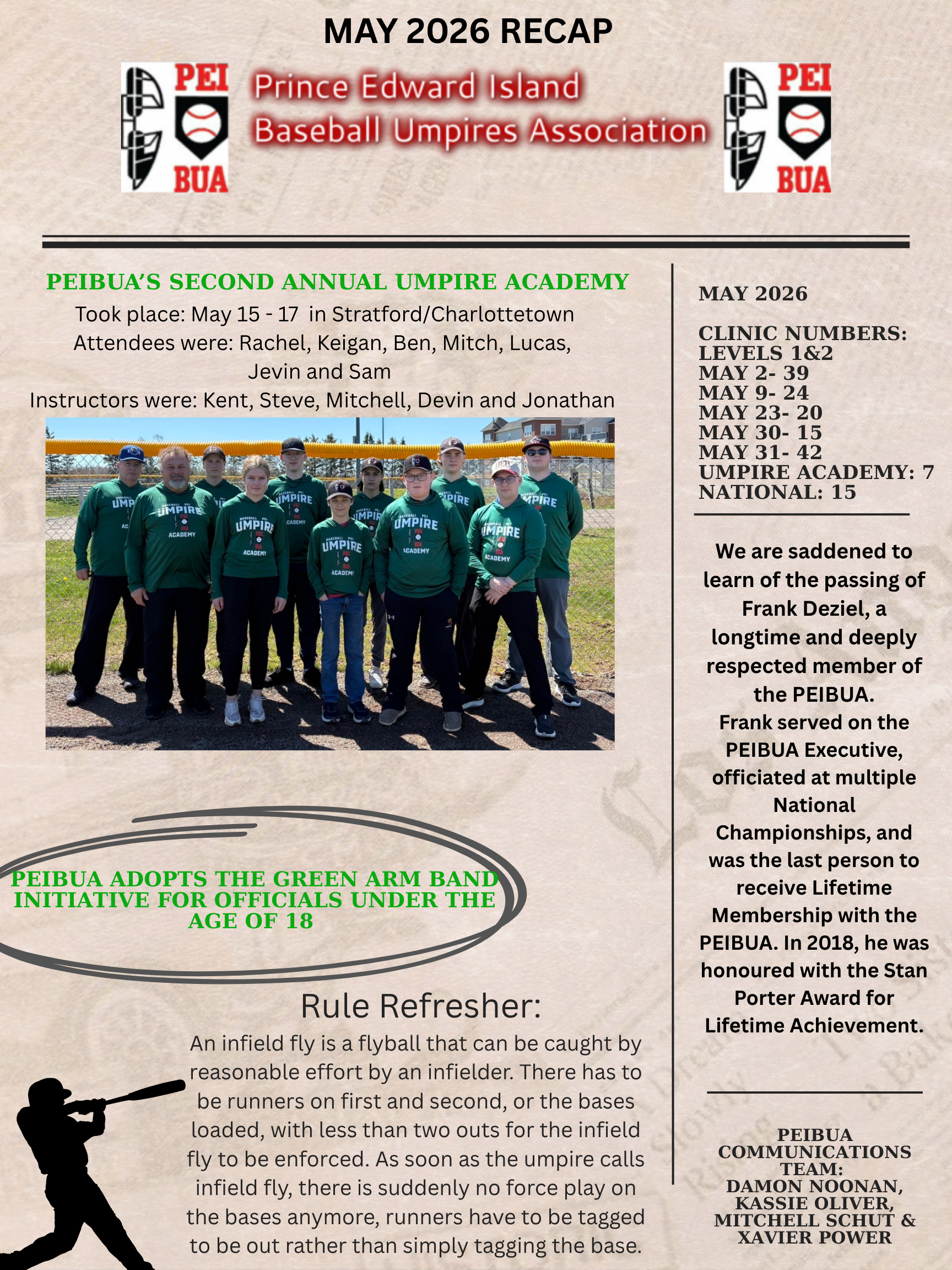
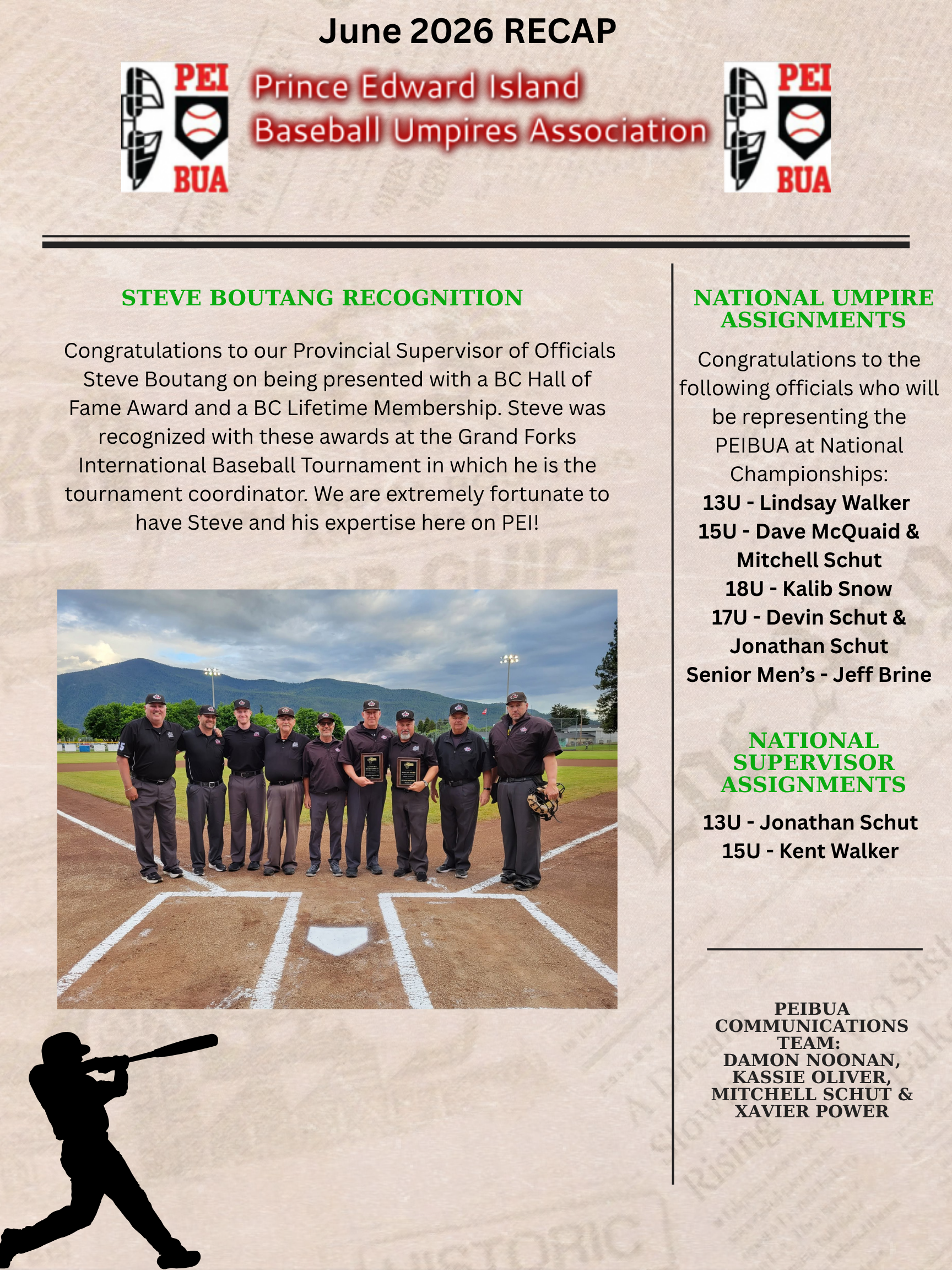
We’re halfway through the baseball season, which means it’s time to recap a busy May and June for the PEIBUA!
In this edition of the PEIBUA Newsletter:
- A recap of our umpire clinics
- Recognition of our Provincial Supervisor
- The announcement of National Championship assignments
Catch up on the latest news and celebrate the officials helping keep baseball strong across PEI!
Umpire Rule Refresher: The Infield Fly Rule
1. When does the rule apply?
For an infield fly to happen, you must have a specific situation on the field. Remember the "A-B-C" checklist before the pitch is even thrown:
- A - Any Routine Fly Ball: It must be a fair fly ball that an infielder can catch with normal, ordinary effort. (This does not include line drives or bunts).
- B - Base Runners: There must be runners on first and second OR the bases must be loaded.
- C - Cheap Outs: There must be less than two outs (0 or 1 out).
Why does this rule exist? It protects the runners! Without it, a clever infielder could let a lazy pop-up drop on purpose and turn an easy, cheap double play.
2. What happens when you call it?
The moment you declare an infield fly, two major things instantly change:
- The batter is automatically out: It doesn't matter if the fielder catches the ball or drops it.
- The force play is dead: Because the batter is out, base runners are no longer forced to run to the next base. They can stay safely where they are. If they do choose to run, the defense must tag them with the ball to get them out.
3. How to make the call (Umpire Mechanics)
Good timing is everything. Do not wait for the ball to start falling. Make your call clearly while the ball is high up in the air so everyone can hear you:
- Point your right hand straight up into the sky.
- Yell loudly and clearly: “Infield fly, batter’s out!”
- What if it's close to the foul line? Yell: “Infield fly if fair!” This protects you in case the wind pushes the ball foul.
4. Simple Myth Busters
- Myth: The ball has to stay on the infield dirt.
Fact: It does not matter where the ball lands. If your shortstop takes a few steps onto the outfield grass to make an easy catch, it is still an infield fly. It is based on the infielder's effort, not the location of the grass. - Myth: If it goes foul, the batter is still out.
Fact: The ball must be fair. If you call an infield fly, but the ball drifts foul and lands untouched, it is just a normal foul ball. The infield fly is canceled.
5. Quick Umpiring Tip
Struggling to tell if a pop-up is high enough to count? Use the Backstop Rule. Look at the fence behind home plate. If the ball flies higher than a standard 10-foot backstop, it has plenty of hang time to qualify as an infield fly.
Conclusion
When this rule isn’t called properly, total chaos breaks out on the basepaths. Keep this checklist in your mind before every pitch, make your call loud and early, and you'll keep total control of your games. For deeper scenarios, check out the official Baseball Canada guide online.